

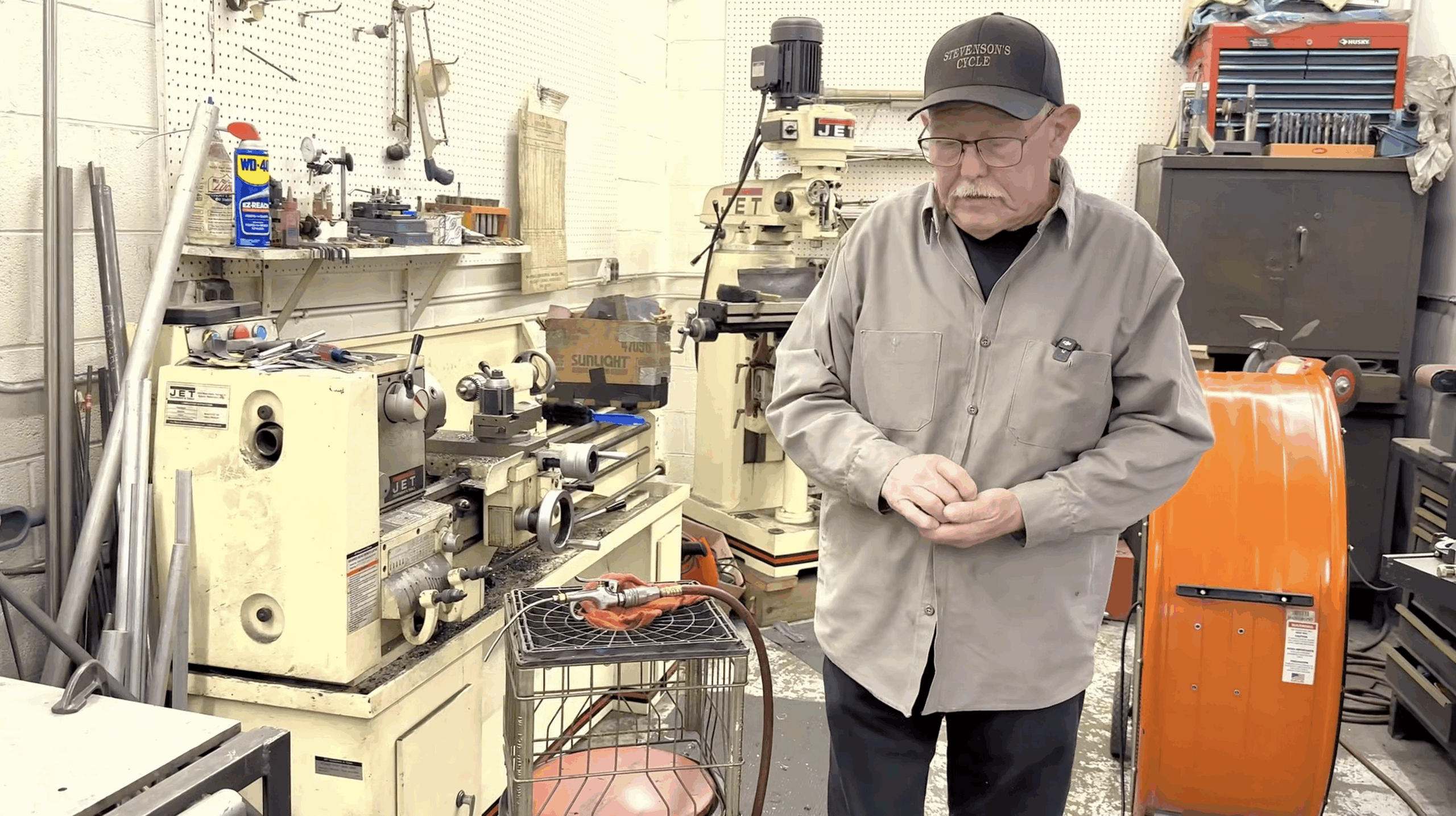
Some shops sell parts. A few change lives. Stevenson Cycle is one of the rare ones that did both. This is the story of founder Steve Broyles, a kid who opened a garage to feed his newborn and built a Michigan institution that still runs on grit, family, and V-twin horsepower.
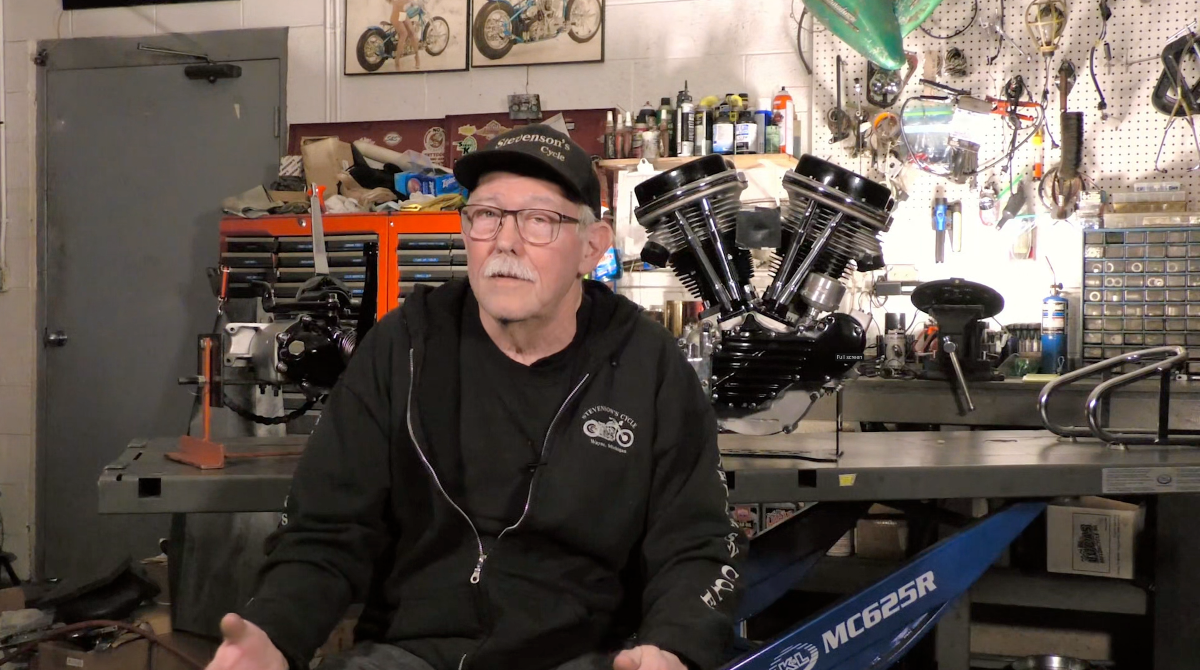
Humble Start In A Tiny Garage
In September 1969, one month after his son Steven was born, 17-year-old Steve Broyles opened Stevenson Cycle behind his parents’ house in Garden City, Michigan. The “shop” was a 400 sq ft building on C3 property, grandfathered with the city, and just big enough for a bench, a few bikes, and a playpen.
He was already handy. By 15 and 16, he was deep into minibikes, dirt bikes, and cars, with a knack for the inner workings of combustion engines. At 16 he enrolled at Wolverine School of Trade and graduated as an assistant instructor. A scholarship took him to Dana Corporation in Ohio, where the love for mechanics cemented for good.
You can see a trailer from the ShopHop Special on Stevenson Cycle Here
He needed money to raise a kid. He also loved wrenches, bolts, and the puzzle of engines. Opening a motorcycle shop was a no-brainer.
He set Steven’s playpen next to the bench. For teething, Steve cleaned and wrapped two Craftsman 3/4 wrenches, froze one and chilled the other, then handed over the closed-end side. It looked wild to outsiders. To Steve, it felt like destiny. The kid would grow up in the shop.
If you ride through Wayne today, you can still walk into Stevenson’s Cycle in Wayne, Michigan and see what started in that backyard garage.
Family roots and life lessons
The Broyles family didn’t flinch around hard work. Steve’s father came up from Kentucky, drove trucks, moved into an office job, then eventually became the owner of a transportation company. His mother worked in banking, and before that, she welded warships in Boston’s shipyard during WWII. At barely 100 pounds and 5 feet tall, she was the one they sent into the tight hull seams.
His parents backed him with advice and belief. The family motto became the shop motto: you can do anything if you put your mind to it.
First welding lesson and mom’s tough love
At 12, Steve bought a stick welder from the muffler shop across the street. He dragged it home to weld a steel plate to a 20-inch bicycle frame. Every arc dimmed the house lights. His mom stormed in, spotted the lack of goggles and gloves, and hauled him to Millers, the local welding supply. She ordered number 9 goggles, gloves, and the right sticks. When the clerk asked what else her husband needed, she cut him off with a classic line: “My husband doesn’t need anything. He doesn’t know how to weld.” Then she told him she’d been welding since he was “green.” Lesson delivered.
Raising kids with a no-failure mindset
Steve carried that mindset forward. Failure only happens when you do not try. If something does not work, choose another path and try again. That is how he raised his kids and how he ran the shop.
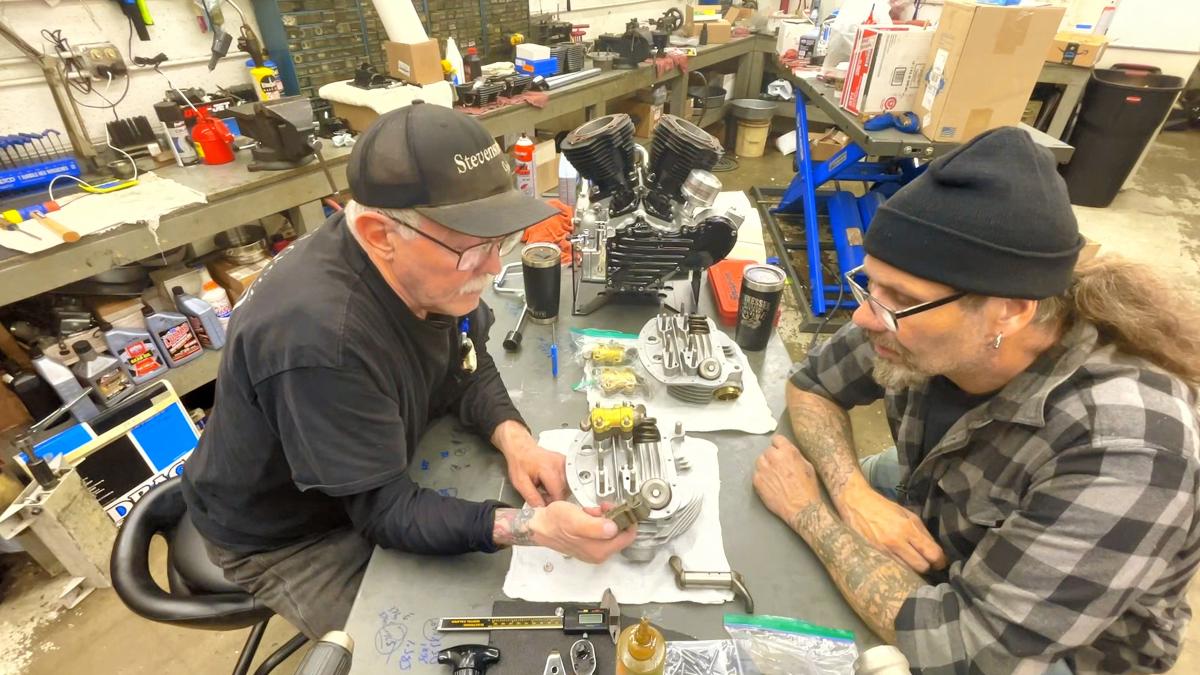 ## Shop growth: from backyard to a 10,000 sq ft complex
Explosive expansions in the Harley boom
The early years were small and scrappy, but the 1990s Harley wave changed everything. Harley-Davidson pushed trade-in programs and pricing that got more riders on V-twins. Demand exploded. From 1990 to 1993, Stevenson Cycle had bikes stuffed behind the counter, in the tiny showroom, and pushed outside during the day just to wrench.
Here is how the shop scaled:
1969 – 400 sq ft garageBehind parents’ house
1970 – 800 sq ft Quick addition
1993 – 2,500 sq ft in RedfordOutgrew it in five years
1998 – 5,000 sq ft WayneAdded dyno room and rear addition.
NowAbout 10,000 sq ft – Extra buildings for storage and machines.
Each move felt like the last. It never was. Finally, at around 10,000 square feet, Steve drew a line and said, that is it.
Inside the machine shop and current projects
The machine room is compact, purpose-built, and busy. A Bridgeport, lathe, and grinders handle fab and one-off solutions that keep older iron on the road. One example, a custom adapter to update obsolete 5/16-24 compression releases to modern styles, saving a customer from pulling a head.
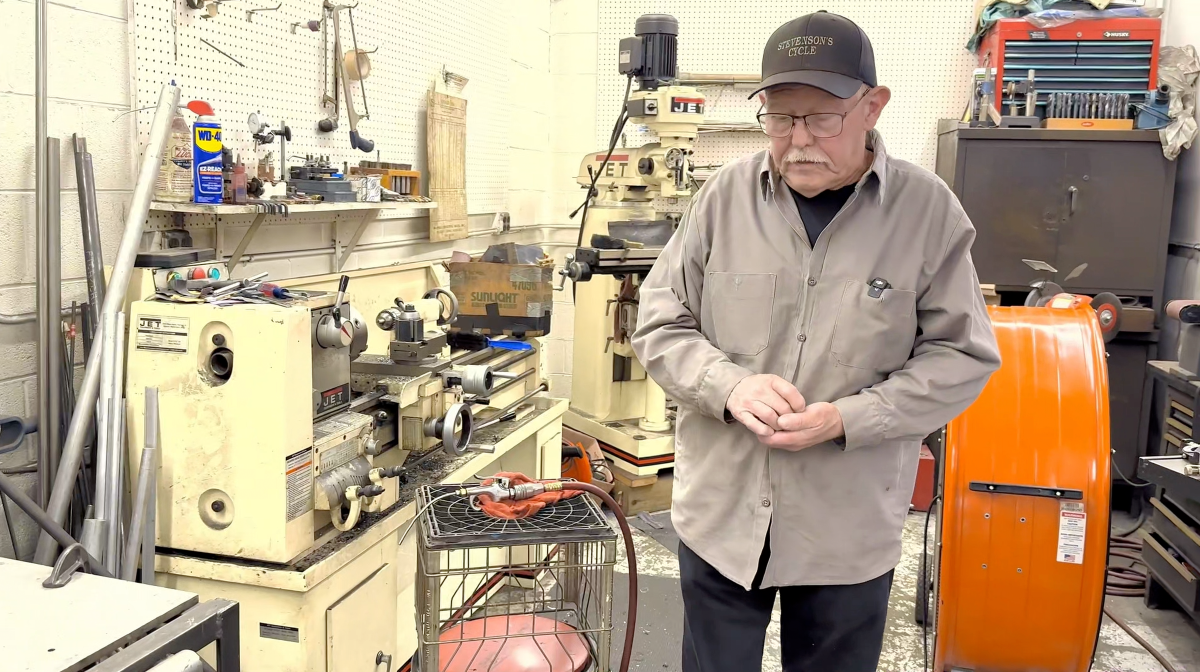 Around the shop, municipal service bikes sit next to classics on benches. Typical jobs include modern ignition upgrades, kicker cover bushings, and freshening riders that need another life.
- Steve works off two benches.
- Steven works off three.
- Bikes move from rear staging to benches, then to the street for test rides.
Father and son, side by side
30-plus years of memories with Steven.
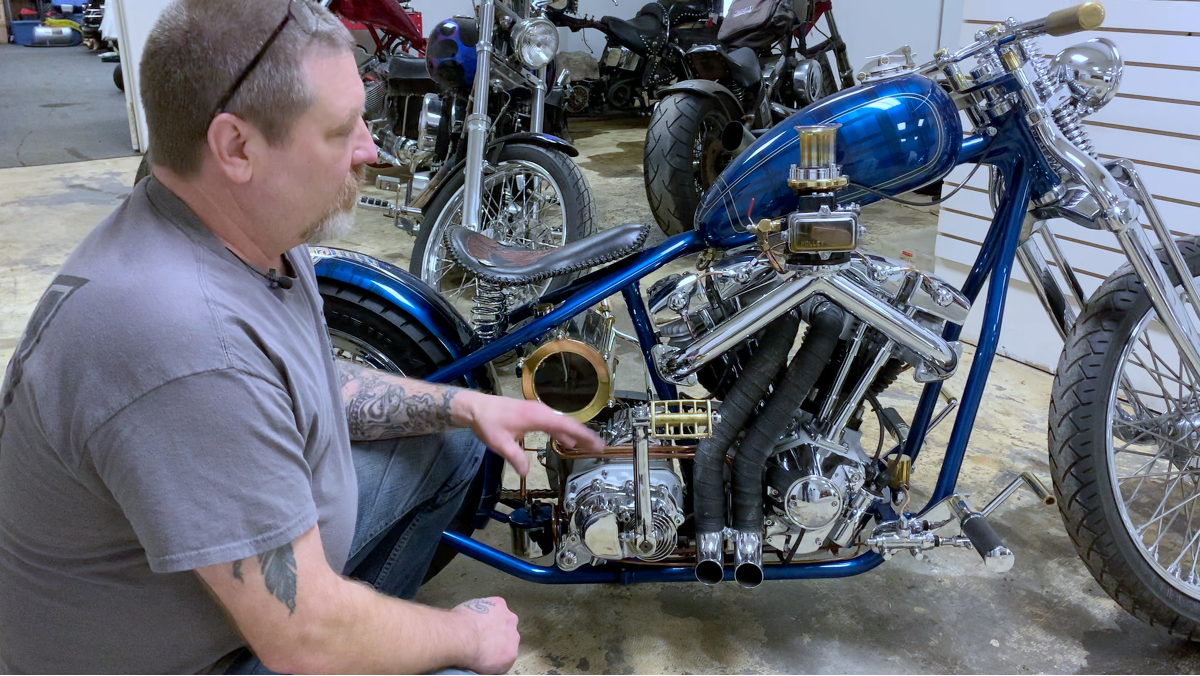 Ask Steve about the best part of his job and he will tell you it is working with his son. Steven grew up adjusting chains on his bicycle, then his minibike, then his dirt bike, then running back out to play. At 17, he walked in and said he wanted to work full-time, learn service and repair, and build Harley-Davidson motorcycles. For a dad, it does not get better.
Proud moments in bike building
One highlight still shines. Steven was an invited builder at Smokeout 8 in Salisbury, North Carolina. He built “Deuces Wild,” with a plaid paint job from Dared Williams at Liquid Illusion, a reverse flow engine, a six-speed stuffed into a five-speed case, a four-speed kicker cover, custom forward controls, and a first design of the porthole oil tank that Stevenson Cycle sells today. He won the show. Steve could not have been prouder.
Workflow and hidden treasures
The shop runs in stages. Bikes arrive and queue in back, move to benches, then out the door. In between, there is Steve’s stash, or as he calls it, his collective. White cabinets hold decades of Harley parts. Projects include a 1961 Panhead with a molded frame he built long ago and bought back to redo, another Panhead, a Shovelhead, a Sportster, and a K-model engine he picked up in Pennsylvania. There is always another build waiting.
Dyno room and the art of engine perfection
Testing grounds for hot rod motors
Stevenson Cycle’s dyno room has logged more pulls than most shops in the state. It is one of the oldest dyno centers in Michigan, still running and still useful. Steve will tell you his perfectionism sometimes gets in the way, but it is also how engines leave right. If he hears a faint click in a fresh motor, like a loose-fit pinion gear, he tears it down and fixes it. Good enough is not good enough.
Gearhead confessions
Steve has been a gearhead since his teens. Performance always beats stock. Even “stock” builds get improvements where they count because stock sucks when reliability and feel are on the line. If you love dyno runs and shop talk, you will enjoy the features on Cycle Source TV on YouTube.
Epic collaborations and racing roots
Sons of Speed, a trauma-center level of teamwork
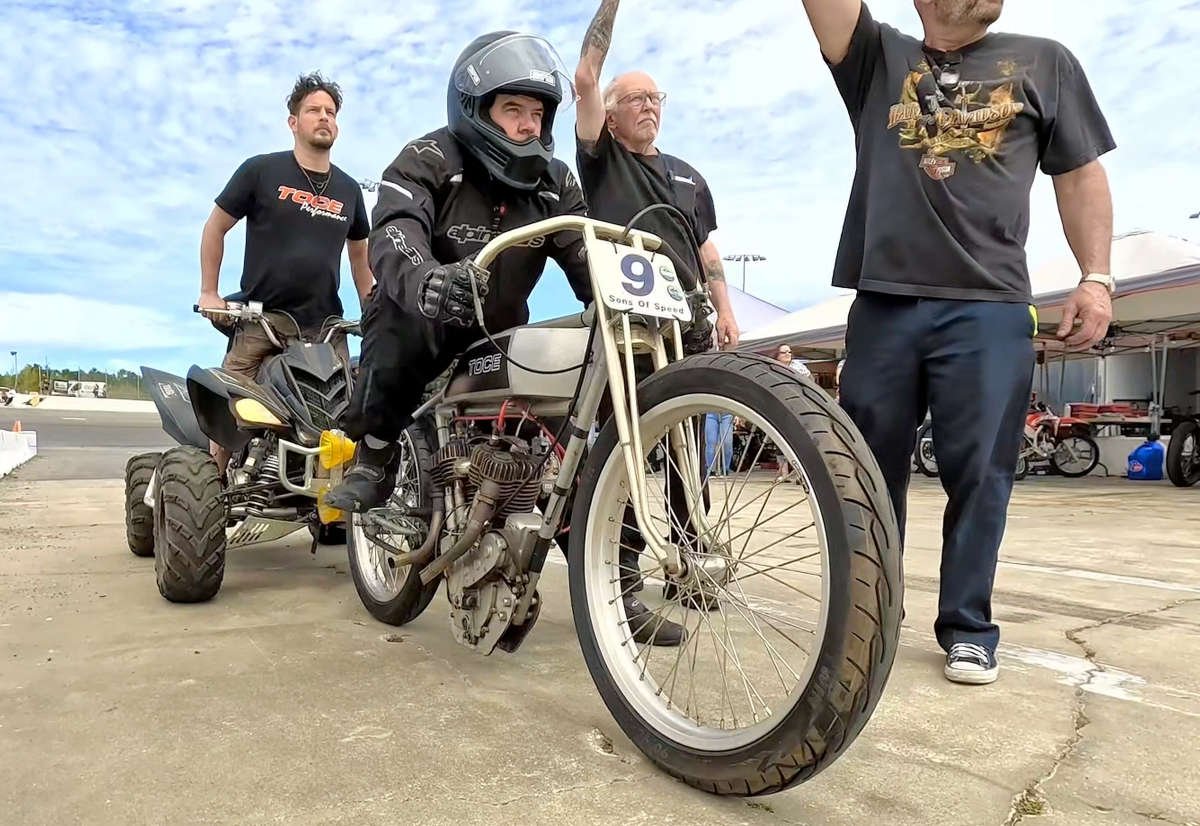 When Billy Lane pulled the first Sons of Speed together, Steve pitched in for five days straight. Barry, Grimy, Paul Cox, Rick Petco, Tom Keifer, and Mike Beland came through the doors. It ran like a trauma center at full tilt. No egos, just focus. Barry lived in the machine room. Steve directed the front, calling tasks, tearing engines, wiring, lacing wheels, and pushing builds forward. It was one of those rare times you wish there were GoPros rolling because the flow will never be repeated.
Brotherhood with Dan Toast
Down there, Steve met fabricator and builder Dan Toast. They clicked fast. Steve built a 45 motor and transmission in Detroit. Dan built the chassis in Connecticut. They met at Dan’s shop in Daytona, rolled the bike in, and fired it that night. It felt like the Billy days again, only now it was the two of them, moving in parallel without words.
That chemistry turned into the Stevenson-Toast Racing Team. Name it however you want, the point is they are racing. Together they developed a slip-on exhaust for the Pan America that is selling well, and they have a Sportster S system lined up with a Daytona timeline. They trade photos and ideas constantly. It is a rare fit.
Tech columns and a turn at The Horse
When Hammer at The Horse Backstreet Choppers relaunched, he asked Steve to serve as a tech advisor. Steve wrote pieces and fact-checked submissions. Some claims did not pass the reality test, like swapping rods in a Harley without splitting the cases. After Hank McQueen passed, Steve bought stock shares from Mrs. McQueen and the accountant, then helped drive advertising. His daughter Carrie stepped in as his executive assistant, handling the flow so he could focus on products, partners, and shop work.
 For more from the crew behind this story, check out the Stevenson Cycle ShopHop Episode On Cycle Source TV.
Juggling businesses and the daily grind
Multiple ventures and family support
At one point, Steve was running four companies: Stevenson Cycle, a real estate business flipping homes with his wife, The Horse responsibilities, and Evil Engineering’s belt drive brand. His dad’s advice kept him steady: you do not need to be a rocket scientist to launch the ship, you just need people around you who know how.
A day in the service department
Steve usually rolls in around 9 to 9:30. First stop is parts and work orders. Every bike gets a fulfillment list. Tires, shocks, tubes, seals, pistons, valves, guides, rods, oil pumps, charging parts, and more sit in stock because a real shop is its own parts store. The goal is simple. Pull the bike in, install everything right the first time, test ride, and call the customer. Do not see that bike again unless it is for fresh oil or another upgrade.
They stock proven parts, many USA-made. Cheap relays that melt or regulators that fail are not an option. Comebacks kill margins and trust.
Retail wonderland: parts, gems, and hidden finds
2,500 sq ft of bike goodies
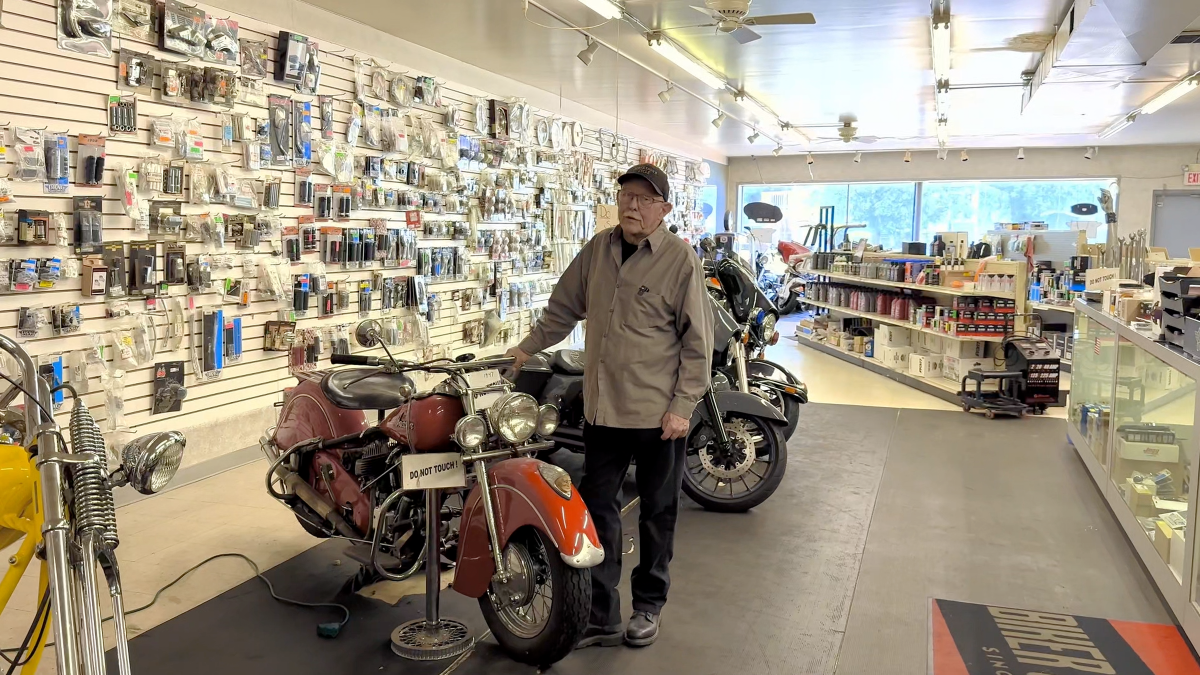
The retail side holds exhausts, primary covers, levers, pegs, grips, lighting, and more. Displays cover ignitions, oil pumps, brakes, transmission parts, carbs, and LEDs. Behind the counter are the bins and boxes that keep the service side moving, including Colony and Gardner-Westcott hardware. You might spot a 1947 Indian that Steve once parked in his home office. His wife said, “I will put a pan down.” Keeper status confirmed.
Behind-the-scenes stock
Down the aisles are cables, cams, pushrods, charging pieces, Harley hard parts, brake pads, carb kits, wheel gear, electrical, pistons, valves, guides, clutches, and springs. There are hidden gems too, like new-old-stock carbs labeled DC7, DC12, DC10, and a pair of XR750 units you will not find often. Some treasures were gifts, some were finds, all of them are future solutions.
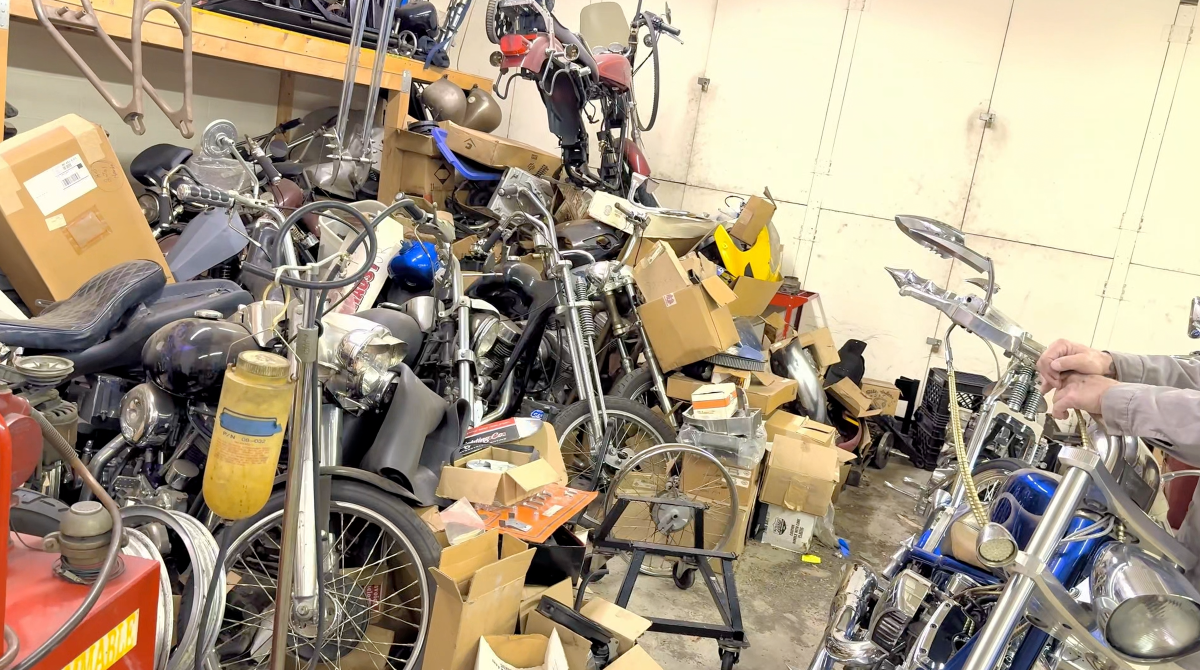 And tucked on a shelf, the Evil Belt Drive is stirring again. New prototypes are heading to the machine shop with the aim to bring the line back. The finished unit on display looks ready.
You can keep up with new parts and builds by following Stevenson’s Cycle on Facebook or scanning hours and contact details on their Yelp listing for Stevenson’s Cycle.
Passion over profit: the real legacy
Never worked a day, it is all play
From 1987 to 1993, Steve put in days at his dad’s company, then wrenched at night in his shop. Dinner landed around 10. But when you love it, it is play, not work. Turn passion into your job and you never really clock in.
The challenge of mom-and-pop survival
Money comes in waves. In the 2008 to 2010 crunch, Steve and Tanya re-mortgaged their home to keep the doors open. A friend once joked, you make $100,000 in the motorcycle business by starting with $200,000 and quitting when you get to $100,000. The hard part is not the joke. It is that the old mom-and-pop shops are disappearing. With them goes the hard-won knowledge that keeps bikes safe and sound. YouTube cannot replace a lifetime at the bench.
Iconic builds and a riding philosophy
Favorite creations and a style you can spot
Steve’s style leans low, fast, and clean. His 1959 Panhead bobber is a regular. He once parked it for what he thought was five years, then noticed the plate said 2012. Back on the bench it went. Carbs cleaned, fired, and pointed at Smokeout.
He has ridden that Pan cross-country, from Cottonwood, Arizona to North Carolina. Rain did not matter. At 7 a.m., the old bike idled in gear. The message was simple. Keep up.
The 2008 GL Special lived in Steve’s head for two decades before a client asked for whatever he wanted to build next. He went all-in. A Schwinn-inspired frame and tank, no traditional rear chain adjusters, a compound-curved oil tank with glass sides, and a lowered starter drive tucked behind a Baker grudge box. The 93-inch Shovelhead was fully polished, right down to the fins. It scored 99 points under Autorama-style judging. The single point lost came from a tiny mismatch in the spacing of an exhaust run to preserve the bike’s flow line. It still took big wins, including the Canadian Cup.
Other highlights include Deuces Wild, Twister, GL Special, and a run of Penthouse club choppers that hang from ceilings. Styles spread. Builders take cues. That is not a problem. To Steve, copying is flattery when it pushes the craft.
Refuse to grow up
The arc is simple. You start with toy cars, then a tricycle, then a bicycle and the freedom of six blocks to a friend’s house before the streetlights. Then minibikes, then motorcycles and cars, and all of a sudden you are a grown kid in a shop full of tools. Steve still buys his grandson little electric bikes with training wheels. He plays with trains. He plays motorcycles. He will take life seriously when he is gone. His favorite line came from Sugar Bear, and he repeats it often: it is all about the ride.
Conclusion
From a 400 sq ft garage to a 10,000 sq ft complex with a dyno and machine room, Steve Broyles built more than a shop. He built a way of life that mixes family, craft, and motorcycles in equal measure. The parts bins are deep, the knowledge is deeper, and the doors are still open in Wayne, Michigan. If you care about old-school service, new ideas, and honest work, go see the place Steve and Steven built together. Then go ride. Because in the end, it is all about playing motorcycles.


