

Article and Photos By: AJ Bengoa
From Issue 319 Of Cycle Source Magazine. See The Entire Digital Issue HERE Or Subscribe HERE Today And Get A Real Magazine Delivered To Your Door!

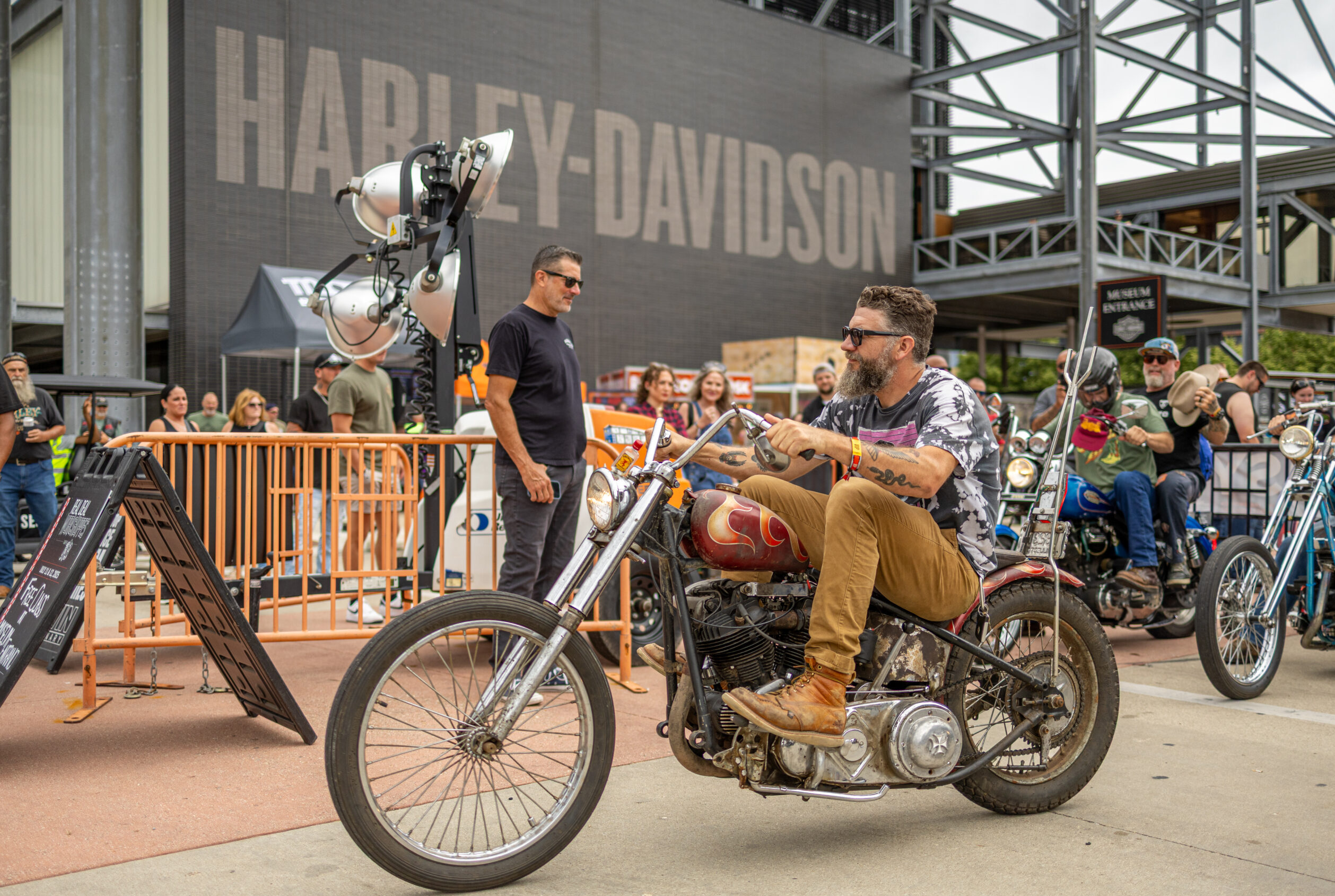
The Harley-Davidson Homecoming Festival has become a cornerstone event for Milwaukee, drawing in riders, music fans, and diehard enthusiasts from across the country. July 10–13, 2025 was no exception, as the city transformed into a high-energy hub of chrome, sound, and shared culture.
Rooted in earlier gatherings meant to strengthen the bond between Harley-Davidson and its hometown, Homecoming has grown into more than just a festival—it’s a statement. It reinforces Milwaukee’s place at the heart of the brand while giving riders a reason to return year after year. There’s history here, and you feel it in every mile ridden into town.
In 2025, key locations like Veterans Park along the Lake Michigan shoreline, the Harley-Davidson Museum, and Davidson Park came alive as thousands rolled in. Streets filled with bikes, sidewalks packed with spectators, and everywhere you turned there was something happening. The weekend delivered a mix of live music, moto-culture, and hands-on experiences that kept people moving from one spot to the next.

Veterans Park served as the epicenter. Set against the lakefront, it became the main stage for both music and action. Chris Stapleton headlined to a sold-out crowd, delivering a set that carried across the water and into the city. Supporting acts like Turnpike Troubadours and Sierra Ferrell added depth to the lineup, giving the weekend a soundtrack that matched the energy on the streets.
But Homecoming isn’t just about the music. The Monster Energy Freestyle Motocross shows brought a different kind of noise—one fueled by throttle, precision, and risk. Riders like Axell Hodges and Takayuki Higashino pushed the limits with tricks that left the crowd holding its breath. It was a reminder that at its core, this culture is still about machines being pushed to the edge.

The Ives brothers added another layer of intensity with their stunt performances near the museum grounds. Their riding blurred the line between control and chaos, pulling crowds tight and keeping them locked in from start to finish. It was raw, loud, and exactly what you expect from an event built around motorcycles.
Of course, not everything goes to plan. Severe weather rolled into the area Friday night, forcing organizers to shut things down early at Veterans Park. Harley-Davidson made the call to evacuate, putting safety ahead of schedule. It wasn’t a popular move in the moment, but it was the right one. Leadership stood behind the decision, and the company followed through with full refunds for Friday ticket holders and partial refunds for multi-day passes—an effort to take care of the people who showed up.

Outside of the main venues, the rest of Milwaukee leaned all the way in. Local dealerships, the Motor Company’s headquarters, and satellite event spaces became destinations of their own. Each offered something different—demo rides, historical displays, and opportunities to get closer to the machines and the brand. The entire city felt connected, like every piece was pulling in the same direction.
While the festival itself delivered the energy, one of the most unique opportunities tied to Homecoming happened behind closed doors at the Harley-Davidson Product Development Center. Known simply as the PDC, this is where the future of the brand takes shape. It’s not a place the public sees, and even within the company, access is limited.

Cycle Source was granted rare entry inside, offering a look at the process behind the machines. The PDC blends old-school craftsmanship with advanced technology in a way that feels true to Harley-Davidson’s identity. One of the standout elements is the CNC clay modeling program, where designers shape full-scale components by hand, then refine them using precision machining. It’s a balance of feel and function—something you don’t fully understand until you see it in person.
Every part that makes it onto a Harley-Davidson motorcycle goes through intense evaluation inside these walls. Design isn’t just about looks; it’s about durability, performance, and real-world use. Engineers and designers work side by side, constantly adjusting and refining based on testing and feedback. Nothing is rushed, and nothing is overlooked.
That attention to detail carries into the testing process. Components are pushed well beyond normal conditions, subjected to stress tests that simulate years of riding in a fraction of the time. Engines, frames, and individual parts are all put through their paces to ensure they hold up when it counts. It’s a level of scrutiny that explains why these machines have earned their reputation.

At the same time, the PDC is where Harley-Davidson is looking ahead. New developments in electric powertrains are underway, with a focus on maintaining the feel and performance riders expect while adapting to a changing landscape. There’s also a strong push toward expanded customization, with modular design concepts that allow riders to tailor their bikes more easily than ever before. It’s clear the company is working to evolve without losing its core identity.
A few miles away, the Harley-Davidson Museum offers the other side of the story. Located along the Menomonee River, the museum sits on a 20-acre campus that traces the brand’s history from its earliest days to the present. With more than 450 motorcycles and thousands of artifacts, it’s a deep dive into how Harley-Davidson became what it is today.
New exhibits introduced for 2025 added even more depth. “The Art of Customization” highlights builders who have taken Harley platforms and pushed them in new directions, showing just how far creativity in this culture can go. “Racing Through Time” captures the brand’s competitive history, from early board track machines to modern racing efforts, tying performance and innovation back into the larger story.

For those who got beyond the standard tour, the museum offered something even more unique. Cycle Source was able to access areas not typically open to the public, including archive spaces and restoration zones where historic bikes are preserved. Seeing that side of the operation adds another layer of appreciation—not just for the machines themselves, but for the effort it takes to maintain their legacy.
At the center of the museum sits Serial Number One, the oldest known Harley-Davidson motorcycle. It’s a simple machine compared to what surrounds it, but it carries weight. It represents the starting point for everything that followed, and seeing it in person brings the entire timeline into focus.
Back outside, the festival continued to do what it does best—bring people together. Riders from different backgrounds, different parts of the country, all showing up for the same reason. Conversations start easy in a place like this. You don’t need much more than a bike and a story to connect.

That’s what gives Homecoming its staying power. It’s not just the music, the stunts, or even the access—it’s the sense of community that runs through the whole thing. Old friends reconnect, new ones are made, and for a few days, everything revolves around the same shared passion.
By the time the engines cooled and the crowds thinned, what was left was more than just another successful event. The 2025 Harley-Davidson Homecoming Festival reinforced what the brand has always stood for—freedom, connection, and the kind of culture that can’t be manufactured.
It’s built over time. And in Milwaukee, you can feel every bit of it.


