

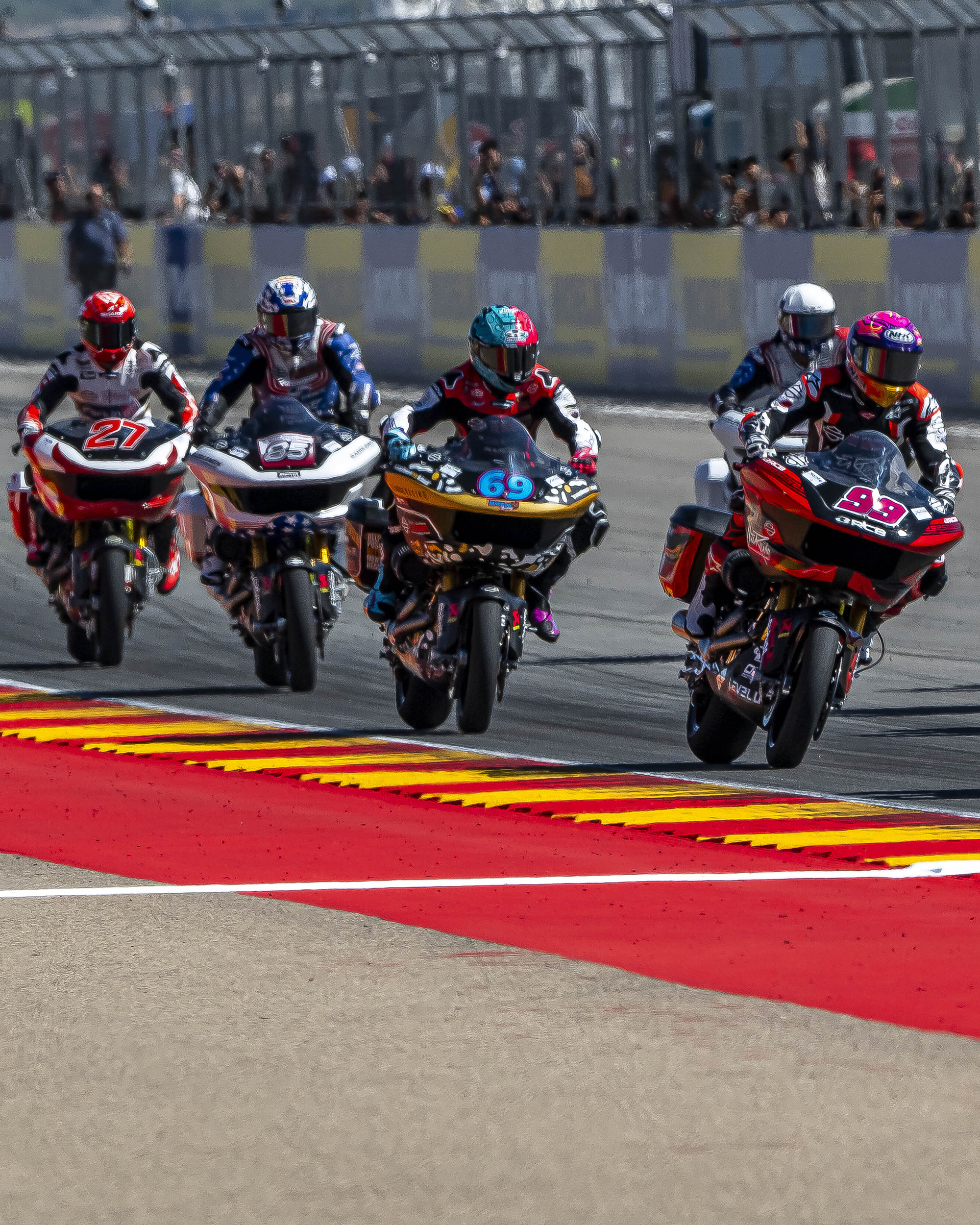
Harley-Davidson is changing the way it goes racing. Beginning in 2027, the Motor Company will split its competition efforts into two complementary programs: a bigger international push with the FIM Harley-Davidson Bagger World Cup and a new grassroots racing initiative designed to put more riders on the track.
At the same time, Harley-Davidson will conclude its Factory Racing participation and official team support in MotoAmerica King of the Baggers following the 2026 season, marking a major shift for a program that helped turn heavyweight bagger racing into one of the most talked-about forms of American motorcycle competition.
Harley-Davidson Expands the Bagger World Cup
The FIM Harley-Davidson Bagger World Cup will become the company’s premier racing platform in 2027. Harley-Davidson says the championship will grow with additional teams, riders and races following what it describes as a successful inaugural season developed in partnership with MotoGP, IRTA and the FIM.
According to Harley-Davidson, the first season produced five different race winners, put every participating team on the podium and carried the championship fight all the way to the final round.
“What we accomplished in the inaugural season of the FIM Harley-Davidson Bagger World Cup exceeded our expectations,” said Jeffrey Schuessler, Director – Global Racing Programs, Harley-Davidson. He credited the teams, riders, partners, dealers and Harley-Davidson community for helping establish the series and said the company now has a foundation to build on internationally.
Beyond the racing itself, Harley-Davidson plans to use the Bagger World Cup as a development platform for future motorcycles and race-derived Screamin’ Eagle performance products. In other words, the company sees the racetrack as more than a marketing stage. The engineering lessons gathered under competition are expected to feed back into motorcycles and performance parts available to riders.
“Screamin’ Eagle is where Harley-Davidson engineering meets the relentless pursuit of performance,” said Bryan Niketh, Chief Operations Officer, Harley-Davidson. “Taking lessons learned on the track, and making related performance products available to our riders further underscores the importance of the evolved racing strategy.”
A New Push for Grassroots Harley-Davidson Racing
The second half of the plan is aimed much closer to home. Harley-Davidson says it will develop more accessible racing opportunities for riders across multiple disciplines and experience levels.
The company has not yet released the full structure of the grassroots program, but President and CEO Artie Starrs described a broad approach that could include everything from local drag racing and flat track to dealership-based competition.
“Our evolved racing strategy inspires all of us to ride by putting the fastest Harley-Davidson motorcycles on the biggest stage, while bringing the same competitive edge to a broader audience through our grassroots program,” Starrs said.
That could become an important part of the strategy. While premier-level racing puts Harley-Davidson in front of a global audience, grassroots competition gives everyday riders, independent shops and dealerships a more direct way to participate.
Factory King of the Baggers Program Ends After 2026
The biggest change for American race fans is Harley-Davidson’s decision to end its Factory Racing participation and official team support in MotoAmerica King of the Baggers after the 2026 season.
Harley-Davidson acknowledged the role MotoAmerica and its leadership played in developing the category, specifically recognizing Richard Varner, Chuck Aksland, Terry Karges and Wayne Rainey.
The factory program leaves behind a serious record. Harley-Davidson captured three of the category’s first six national championships, while Kyle Wyman became the most successful rider in King of the Baggers history with 27 individual race wins.
Jason Kehl, Technical Director and Team Principal for Harley-Davidson Factory Racing, thanked MotoAmerica for helping establish the series and also recognized Indian Motorcycle Racing for providing the rivalry that pushed Harley-Davidson’s program forward.
“Having a rival that consistently pushed us to raise our level made our team better, helped elevate the entire category, and made the wins much more meaningful,” Kehl said.
Although the factory team is stepping away from King of the Baggers, Harley-Davidson says the engineering knowledge, performance data and technical capability developed through that program will continue to influence the Bagger World Cup, future motorcycle development and Screamin’ Eagle performance parts.
What Comes Next
Harley-Davidson has not yet released the full 2027 Bagger World Cup schedule, expanded team lineup or detailed structure of the grassroots program. The company says more information will be announced in the coming months.
For riders and racing fans, the direction is clear: Harley-Davidson is moving its highest-profile factory effort onto the international stage while trying to open more doors for riders to compete at the local level. The next question is what those grassroots programs will actually look like—and how the American bagger racing landscape changes once Harley-Davidson’s factory King of the Baggers team rolls out for the final time in 2026.


