

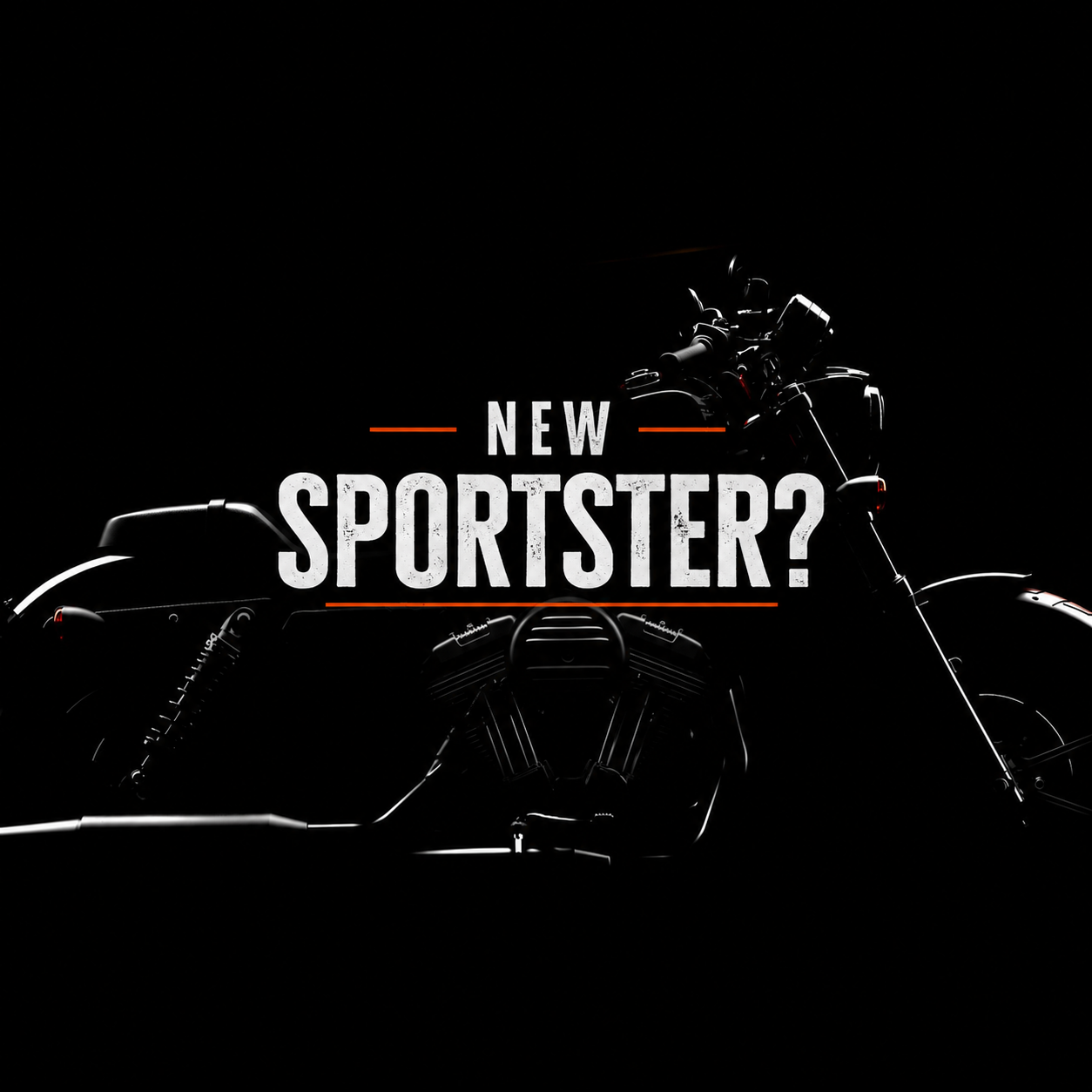
For years, Harley-Davidson riders have been saying the same thing: “Just bring back the damn Sportster.” And quite frankly we have too.
The rumored 2027 Harley-Davidson Sportster is already getting riders talking, and honestly, it’s easy to understand why.
According to multiple reports surrounding Harley-Davidson’s new “Back to the Bricks” strategy, the Motor Company is preparing to revive an affordable, air-cooled Sportster platform for 2027.
That’s a pretty big shift after several years of Harley leaning heavily into higher-dollar touring bikes, the Revolution Max platform, and premium pricing that pushed a lot of younger riders further away from dealerships instead of toward them.
The rumored return would reportedly center around an updated 883-style platform aimed squarely at entry-level riders and customization culture, with pricing expected around the $10,000 mark.
And if you’ve spent any amount of time around chopper builders, garage guys, stunt riders, or the Dyna-bro crowd over the last decade, you already know why this matters.
The old air-cooled Sportster never really disappeared from motorcycle culture.
Sure, Harley officially moved on from the Evo-powered XL platform after emissions regulations and changing markets pushed the company toward the liquid-cooled Harley-Davidson Sportster S and Harley-Davidson Nightster models, but for a huge chunk of riders, those bikes never fully scratched the same itch.

The Evo Sportster was simple. Loud. Cheap to modify. Easy to wrench on. Parts were everywhere. Hardtail kits were everywhere. You could build one into a bar hopper, a lane-splitting city bike, a skinny-tire chopper, or a garage-built death trap depending on your mood and budget.

That accessibility mattered.
And honestly, Harley probably knows it now more than ever.
Under CEO Artie Starrs, the company appears to be pivoting hard toward affordability and younger riders after several rough financial years, declining sales, and criticism that Harley lost touch with working-class riders chasing luxury-bike margins instead.
The “Back to the Bricks” plan reportedly includes not only the return of the Sportster name in a more traditional form, but also a smaller “Sprint” model expected to land below the Sportster in price and displacement.
That combination feels important because Harley hasn’t really had an affordable gateway motorcycle with strong cultural identity since the old XL platform faded away.
And despite all the jokes over the years, the Sportster might actually be one of the most important motorcycles Harley-Davidson ever built.
The platform survived for decades because it could exist in multiple worlds at once. Beginners could ride them. Old bikers could strip them down. Builders could cut them apart. Racers could abuse them. They became one of the most customized motorcycles in American history because they were approachable in a way heavyweight touring bikes never could be.
That’s also why the idea of an air-cooled return has people paying attention.
Not because anybody expects Harley to suddenly turn back the clock to 1998, but because there’s still a massive appetite for motorcycles that feel mechanical, personal, and attainable instead of loaded with screens, ride modes, and price tags that look like truck payments.
At this point, Harley-Davidson hasn’t officially released specs, photos, or technical details for the rumored bike. But the direction itself says a lot.

The company finally seems ready to admit something riders figured out years ago: not everybody wants a $30,000 touring bike.
Some people just want a motorcycle.
And sometimes the simplest motorcycles end up meaning the most.
For more information on Harley-Davidson’s current lineup and future announcements, visit Harley-Davidson Official Website.


