


Article And Photos by Jason Hallman
Walk into any custom motorcycle shop in the country, and you’re likely to hear the same conversations at the sales counter over and over again. While one guy at the counter is asking why one cam makes more power than another, the guy at the other end of the counter wants you to explain why his buddy’s 128 makes more power than his 131 build. This is actually pretty simple to explain when you understand the “why,” not just the “how,” when it comes to making more horsepower. It is a fact that a well-thought-out (smaller) engine build often hits the number when a bigger (less thought-out) engine combination doesn’t.
Before we talk about high performance, let’s recap what your engine’s actually busy doing while it is at work. At its core, your Harley’s engine is just an air pump. It pulls air in, squeezes it, burns it, and pushes it out. Every performance part on the market is trying to do that basic job more efficiently. V-twin engines are four-cycle engines. This means that for every two revolutions of the crankshaft, the piston has traveled up and down from top dead center (TDC) to bottom dead center (BDC) two times to create one power cycle.



These piston movements are called strokes, and there are four of them. Let’s take a quick look at each of them individually to help break down what is actually going on for 720 degrees of crankshaft rotation.
The four strokes are:

1. Intake: intake valve open, piston traveling down, pulling in the air-fuel mixture.
2. Compression: both valves closed, piston comes up, squeezing that mix.

3. Power: the spark plug fires, combustion forces the piston down.
4. Exhaust: exhaust valve opens, piston comes back up, pushing the spent gases out.

While three strokes consume energy, only the power stroke produces it. That’s why efficiency is everything.
Let’s talk about bore and stroke. Bore is the cylinder diameter, while stroke is how far the piston travels in that cylinder. More bore generally gives increased breathing potential and higher horsepower. More stroke equals more leverage on the crank and stronger low-end pull. Neither is right or wrong, just different tools doing one job in concert. Your engine’s compression ratio is how much you squeeze the mix. More squeeze can make more power, but it narrows your safety margin. Torque is “twist”! This is the shove you feel when you snap the clutch and drop the hammer (twist the throttle). Horsepower is how fast you can make that twist. Torque gets you moving; horsepower carries it as revs climb. I used this analogy to demonstrate what you are actually feeling when you are on the throttle, rowing through the gears.

Everyone wants to talk “dyno numbers” these days. There are hundreds of ill-informed (influencer-based) YouTube and Instagram feeds that spew half-truths and misinformation about horsepower and torque, and (unfortunately) there are almost as many self-proclaimed “dyno tuners” taking customers’ money and damaging customers’ bikes, giving the entire aftermarket, and unfortunately some really great parts and manufacturers, undeserved bad press.
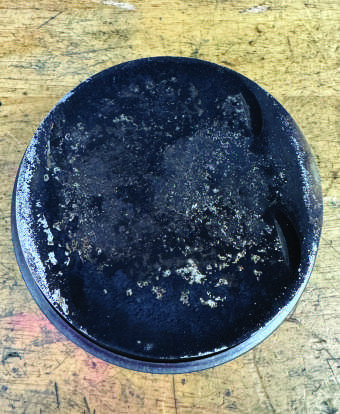
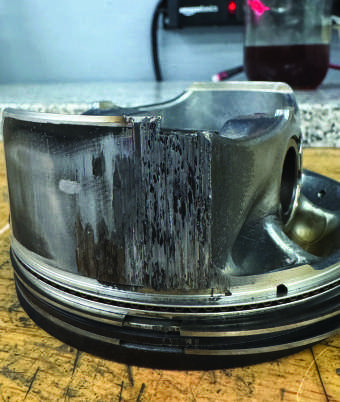
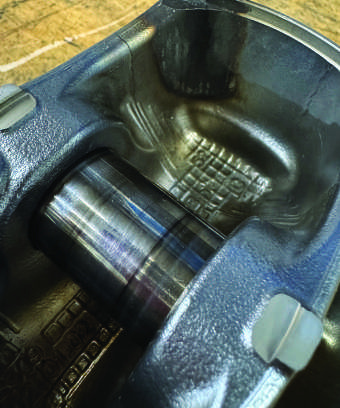
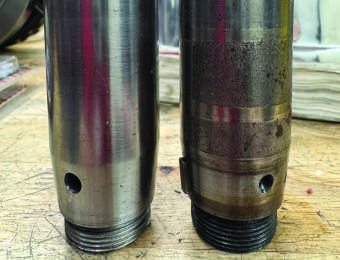
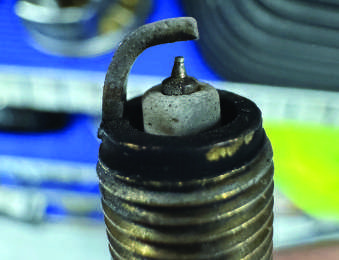
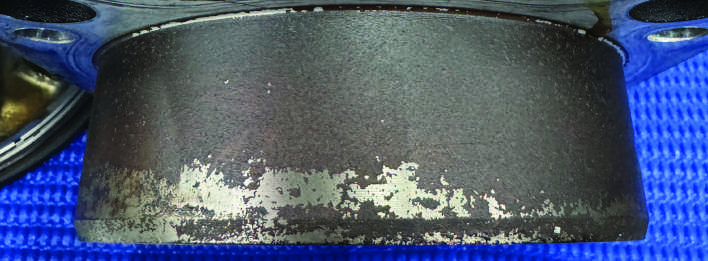
Now let’s talk about the real elephant in the room: detonation. If you’ve ever had someone show up to your party early and unwanted, then you will understand detonation, also called pre-ignition. Detonation is destructive pressure spikes from uncontrolled combustion resulting from mismanaged timing, incorrect fuel mixture, extreme cylinder temperature, poor (low-octane) fuel, and, last but not least, a piss-poor parts combo. If you can imagine an explosion happening while the piston is still traveling upward on the compression stroke, then you can imagine the damage that detonation does to an engine and its ability to perform. Detonation can and will destroy everything in its path. If you have ever heard a ping or a knock from your engine while under a load, you’ve heard detonation. It sounds like a mechanical “knock” because it is. You are actually hearing the connecting rod hammer the bearings in your lower end.


So next time someone says a part makes great power, remember, there’s a lot more to the story. Not everything about performance comes in a shiny box. Next time, we will talk about camshafts.