


Twin Cam Lifter Bore Clearance
Twin Cam lifter bore clearance is one of the most overlooked measurements in a performance camshaft installation, but it can also be one of the most important factors in the longevity and reliability of your Harley-Davidson engine.
Great tech articles like this s can be found in the pages of Cycle Source Magazine, the only custom motorcycle magazine continuously in print since 1997. This article originally appeared in Issue 307.

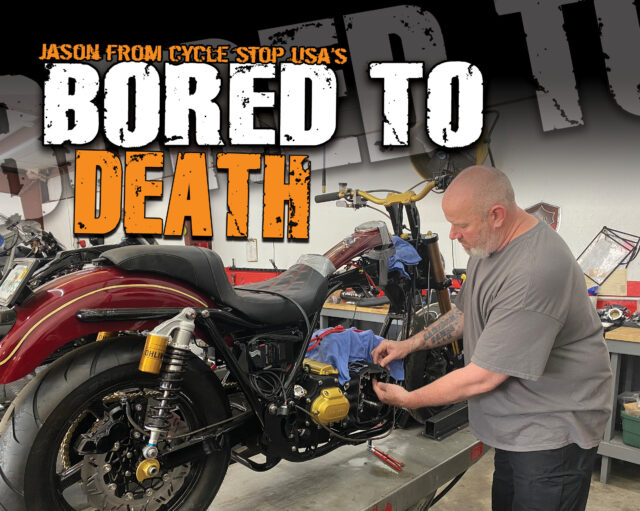
How often have you and your buddies grabbed a 12-pack and headed into the garage to throw a new cam and lifters into somebody’s V-twin? It happens every single weekend all across America. A couple of guys looking for a little more power stop by the local shop, load up on performance parts, and spend the night wrenching in the garage with the confidence that comes from YouTube videos and cold beer.
But here’s the real question—how many of those guys actually have the tools needed to make sure the job is done correctly?
Anybody can bolt in a camshaft. The difference between a fast motorcycle and a reliable fast motorcycle usually comes down to the little details most people skip over. The right tools and proper measurements can mean the difference between riding your bike all the way to Sturgis or loading it into the back of your buddy’s pickup halfway through the trip.
When it comes to making horsepower in the V-twin world, Feuling has earned its reputation the hard way. Their slogan says it all: “No Bullshit… Just Performance.” Their camshafts, lifters, oil pumps, and cam plates are trusted by top engine builders, racers, and tuners throughout the industry because the parts work and the engineering behind them matters.
One area that often gets overlooked during a cam install on Twin Cam and Milwaukee-Eight engines is lifter bore clearance. Unlike Evolution motors and earlier Big Twins, where the lifter blocks are separate pieces, Twin Cam lifter bores are machined directly into the crankcase halves at the factory. That means there’s no easy replacement if something goes wrong.


Before installing a new cam and lifters, the lifter bores should always be checked. That also means accurately measuring the lifters themselves with either a quality micrometer or at minimum a good set of vernier calipers.
Personally, I never recommend reusing factory lifters, even on a brand-new motorcycle. Once you start increasing lift and duration with a performance camshaft, stock lifters become a weak point. Experience has proven that out more than once. A failed lifter in a Twin Cam or M8 can quickly turn into catastrophic engine damage, including destroying the crankcase itself. Spending the extra money on a quality set of Feuling lifters is cheap insurance compared to replacing an engine case.
Once you’ve measured the outside diameter of your lifters, the next step is checking the lifter bores in the case. That’s where the Feuling Lifter Bore Measuring Kit, part number 9004, comes into play.


The kit uses five precision-indexed ball bearings labeled in sizes ranging from .843-inch to .845-inch. The process is simple. Insert the measuring balls into each lifter bore and check the fit. This is basically a go/no-go test. If the bearing slides into the bore with a slight amount of drag, you’re in good shape. If there’s excessive looseness and no drag at all, the clearance is too large.

This is where things get interesting.
Remember back in school when teachers said you’d never walk around with a calculator in your pocket? Turns out they were wrong. Grab your phone and do a little math.


Measure each lifter and record the diameter. Then determine the size of each lifter bore using the Feuling measuring balls. Once you have both numbers, subtract the lifter diameter from the bore size to determine your clearance.
Feuling recommends lifter bore clearance between .001-inch and .0015-inch. That clearance window is critical for proper hydraulic lifter operation while also helping reduce top-end valve train noise.


If the clearance is excessive, you can run into oil pressure issues and noisy valve train operation. If the clearance is too tight, there’s the possibility of sticking a lifter in the bore, which is a disaster waiting to happen.

In some situations, excessive clearance can be corrected with oversized lifters. If the bores are damaged, though, you’re looking at complete engine disassembly and machine work to repair the cases correctly.


It might sound excessive to some people, but once you start chasing horsepower and torque, these details become incredibly important to engine longevity. Proper measurements and quality parts cost a little more upfront, but they’re far cheaper than rebuilding a destroyed engine later.
Buy once. Cry once. Do the job correctly the first time.
For additional information, contact Cycle Stop USA.