


Chris Callen’s Editor’s Desk From Cycle Source Magazine Issue 318
Somewhere around 2020, time stopped playing by the rules. Not poetic. Not romantic. Just busted.
You wake up, grind all day, crash at night, and somehow the week’s gone. Can’t remember a damn thing you actually felt. Days stack up like unread invoices. Everybody’s busy. Nobody’s living.
I don’t need a therapist to tell me that feels wrong.
I’ve read some of the research Stanford talking about stress screwing with how the brain processes time, UCL calling it pandemic temporal disorientation. Fancy words for something every working-class bastard already knew: too much stress, no landmarks, no control, and your sense of time goes soft.
But here’s the part the studies don’t cover.
Motorcycles didn’t change.
Before 2020, riding was freedom. After 2020, it became survival.
Because when the world went digital, delayed, filtered, and fake, motorcycles stayed honest. You turn the key, or you kick it. It runs, or it doesn’t. You move forward, or you sit still. No buffering. No algorithm. No excuses.
The second a motor lights, the noise shuts up.
Your phone doesn’t matter. The news doesn’t matter. Tomorrow doesn’t matter. All that matters is the road in front of you and whether you’re paying attention. Riding doesn’t care how stressed you are, it demands you show up anyway.
Stanford says stress fractures attention and compresses time. Riding does the opposite. It stretches it back out. Five minutes feels like five minutes again. A hundred miles feels like something you earned, not something that disappeared while you weren’t looking.
That’s not therapy. That’s mechanics.
After 2020, everyone found out how thin their routines were. Jobs vanished. Plans collapsed. Futures got wobbly. Riders? We were already used to that. You don’t ride motorcycles if you need guarantees. Weather turns. Roads end. Parts break. You figure it out or you’re stuck.
UCL said the pandemic wiped out time markers. Riding brings them back the old way, by force. Fuel stops. Sunburns. Cold mornings. Long days that leave your hands buzzing and your head clear.
That’s real time. The kind you can feel in your bones.
And then there are the memories. The kind you don’t have to scroll back to find.
Heather and I didn’t do some luxury honeymoon. We rode. The whole damn Pacific Coast Highway. Mile after mile of salt air, cliffs, fog rolling in like it had something to say. No schedule worth a damn. Just road, bike, and each other.
You don’t forget days like that. Ever.
Not because they were perfect, because they were real. Wind trying to shove you into the ocean. Traffic doing what traffic does. That one stretch where you pull over just to shut the motor off and listen to the surf because you know damn well you’ll never be the same person again.
That’s not a vacation memory. That’s a life marker.
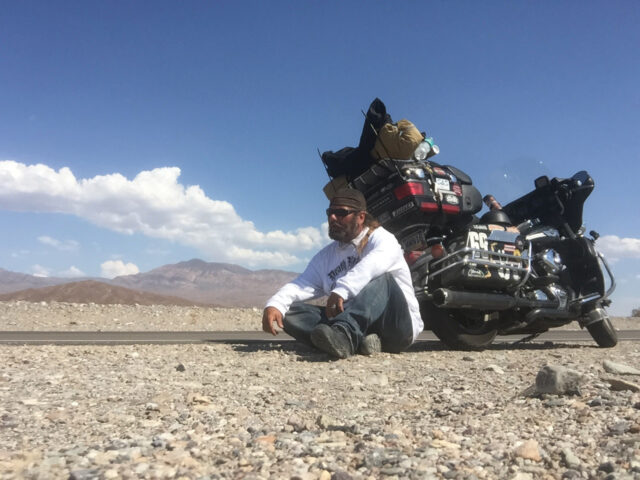
And then there was Death Valley.
If you want to know what time really feels like, break down in Death Valley.
No cell signal. No shade. Heat bouncing off the ground like it’s personal. That kind of place strips everything fake off you real fast. You’re not thinking about emails or deadlines. You’re thinking about water, tools, and how long daylight lasts.
We didn’t panic. We didn’t rush. We fixed what we could, waited when we had to, and watched the sun move across the sky like it’s done forever.
That breakdown? That’s a memory of a lifetime. Not because it was fun, because it was honest. Because it demanded patience. Because it forced us to exist inside the moment instead of trying to escape it.
You remember that kind of time. You carry it with you.
That’s the difference between riders and everybody else chasing experiences. Riding isn’t about collecting moments, it’s about surviving them. That’s why they stick.
People ask why riders can tell stories from decades ago like they happened yesterday. It’s because riding brands time into you. Smell of hot oil. Taste of dust. The sound a motor makes when it’s not happy. The look you give each other when things go sideways and you both know you’ll figure it out.
Try remembering what you watched on Netflix last week.
Everybody’s downloading meditation apps now, paying to learn how to be present. Riders have been doing that for a hundred years. It just requires a machine that doesn’t forgive mistakes and a road that doesn’t care about your feelings.
Motorcycles don’t give a damn what year it is.
They don’t know what’s trending. They don’t care if you’re late. They don’t care how important you think you are. You give them attention and respect, or they punish you. That kind of relationship is rare now. You can’t multitask on a bike. You can’t fake awareness. You can’t half-show up. Riding demands honesty, and honesty is outlaw shit in a world built on distraction.
That’s why riding feels dangerous again, not just physically, but culturally. It refuses to be passive. It refuses to be optimized. It refuses to be efficient.
Riding reminds you that time isn’t something you save. It’s something you spend. And most people spend it like it’s worthless.
Riders don’t.
Post-2020 taught everyone that someday is bullshit. Riders never believed in someday. That’s why bikes get built instead of talked about. That’s why trips happen even when it’s inconvenient.
Riding has always been a middle finger to waiting for permission.
You ride now. Or you don’t ride.
Maybe time didn’t actually change after 2020. Maybe we just lost our nerve. Motorcycles don’t let you drift. They grab you, shake you, and remind you that the clock is still ticking, and it’s on you what you do with it.
Motorcycles don’t promise more time.
They give you time that matters.
So, this is our annual Year In Review Issue, and a special issue that we have done for 19 years in a row at this point. Maybe after reading this editorial, you’ll understand why we stop each year, count our blessings, pay respect to those we lost and salute the passage of time. Good luck in the new year!


Read more of the Editor’s Desk in each issue of Cycle Source Magazine by subscribing today!